_edited.png)

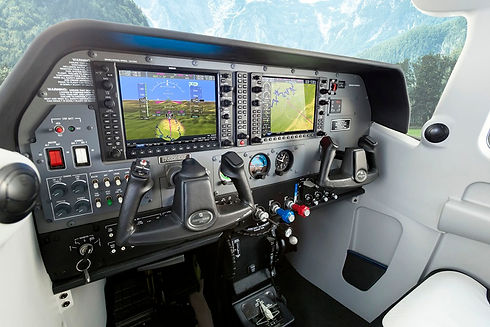
Instrument Rating
IRA (Airplane Single Engine Land)
Minimum Required Flight Hours:
50 hours cross-country PIC (required for IFR eligibility)
40 hours of actual or simulated instrument time per 14 CFR Part 61.65
Average cost as of 2026:
$10,000 - $15,000 Dollars
Minimum Age:
17 Years old
Prequisite:
Private Pilot License (PPL SEL)
Minimum Medical Certificate:
FAA 3rd Class
Typical Duration:
3-6 Months
About Instrument Rating
Instrument Rating is where flying becomes precise, structured, and system-based. Instead of relying on visual references, you learn to trust your instruments and operate safely in low visibility conditions. This stage is where pilots transition from “looking outside” to managing information inside the cockpit. Concepts like weather interpretation, instrument procedures, navigation systems, and ATC communication become the foundation of every flight. You won’t just learn how to fly the airplane; you’ll learn how to manage workload, stay ahead of the aircraft, and make decisions in a constantly changing environment.
Training typically includes:
-
Instrument scanning and control
-
Holding patterns
-
Instrument approaches (ILS, RNAV, VOR)
-
Departure and arrival procedures (SIDs & STARs)
-
Enroute IFR navigation
-
Partial panel and system failures
-
ATC communication in IFR environments
-
Real-world weather decision making
Most students find this stage challenging at first. In reality, it’s where discipline, precision, and confidence are built.
Timeline
.png)



Analyze what career path is most suitable for your needs. Either going through a college program, a Part 61 or Part 141 school.
For students outside the United States:
After determining your desired career path, obtain the required documents for obtaining a Visa: I-20, acceptance letter, etc. Then schedule an appointment at your local U.S. Embassy. You may have two appointments: one for fingerprints and another for the interview.
For students inside the United States:
Continue training in your flight school or college program. If you plan to move to another city or state and change schools, make sure to transfer your SEVIS and I-901 Fee to the new school.
Prepare for travel to the United States. This involves gathering documents, supplies, clothes, medication, etc.
Recommended:
Before traveling, consider enrolling in the Instrument Rating Pre-Arrival course (Coming Soon). This program helps students with:
-
A ground school designed to build your foundation while guiding your transition from Spanish to English aviation training.
-
The program begins in Spanish and transitions progressively into full English instruction.
-
Navigate FAA & TSA requirements (IACRA, MedXPress, FTSP)
After completion, students receive an endorsement to take the IRA knowledge test.
For students outside the United States:
After arriving in the United States, make sure to complete:
-
IACRA application in order to obtain a student pilot certificate.
-
Take your knowledge test at a PSI testing center
-
Attend a physical examination with an AME (Aviation Medical Examiner)
-
Obtain STA FTSP approval from TSA.
Continue with the requirements listed under 14 CFR Part 61.65 (d):
-
50 hours of cross-country PIC time.
-
40 hours of instrument time, actual or simulated. Some training from Private Pilot might qualify towards this requirement.
-
One cross-country flight of at least 250 nautical miles along airways or directed routing, featuring at least 3 different instrument approaches.
-
3 hours of flight training with an authorized instructor in a single-engine airplane in preparation for the practical test, which must have been performed within the preceding 2 calendar months from the month of the test.
Recommended:
Practice real-world oral exam scenarios, identify weak areas, and build the confidence needed to succeed on your practical test with the Instrument Rating Checkride Oral Readiness program (Coming Soon). Most students underestimate this stage. This is where preparation truly makes the difference.
Complete a practical test, also known as the "Checkride," with a Designated Pilot Examiner (DPE). This test would consist of:
-
An oral examination of the areas listed in the Airman Certification Standards (ACS) & deficiency areas in the knowledge test.
-
A flying portion in which the student would show mastery of the procedures and maneuvers required for the license.
Upon successful completion, the student would receive a Temporary Airman Certificate, valid for up to 120 days. During that period, the pilot may exercise the privileges of their Instrument Rating. And should receive their permanent certificate or license by mail after the Airman Registry process is complete.
